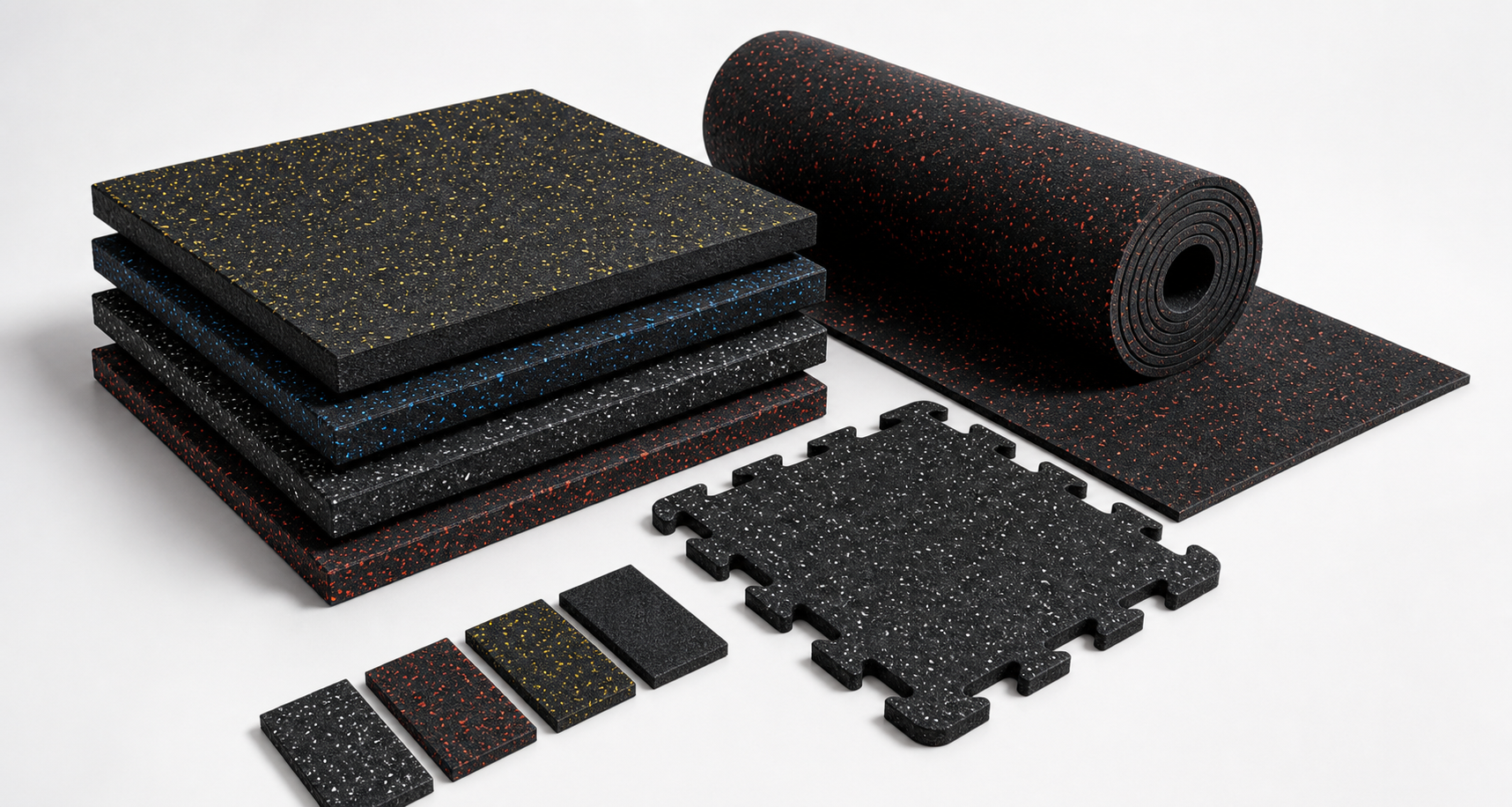
Request Free Samples
Compare surface, density, color and thickness before bulk order.

Weight rooms need stable flooring for machines, benches, racks, dumbbells and plate storage. A good specification balances shock absorption, surface stability, replacement planning, acoustic needs and export cost.
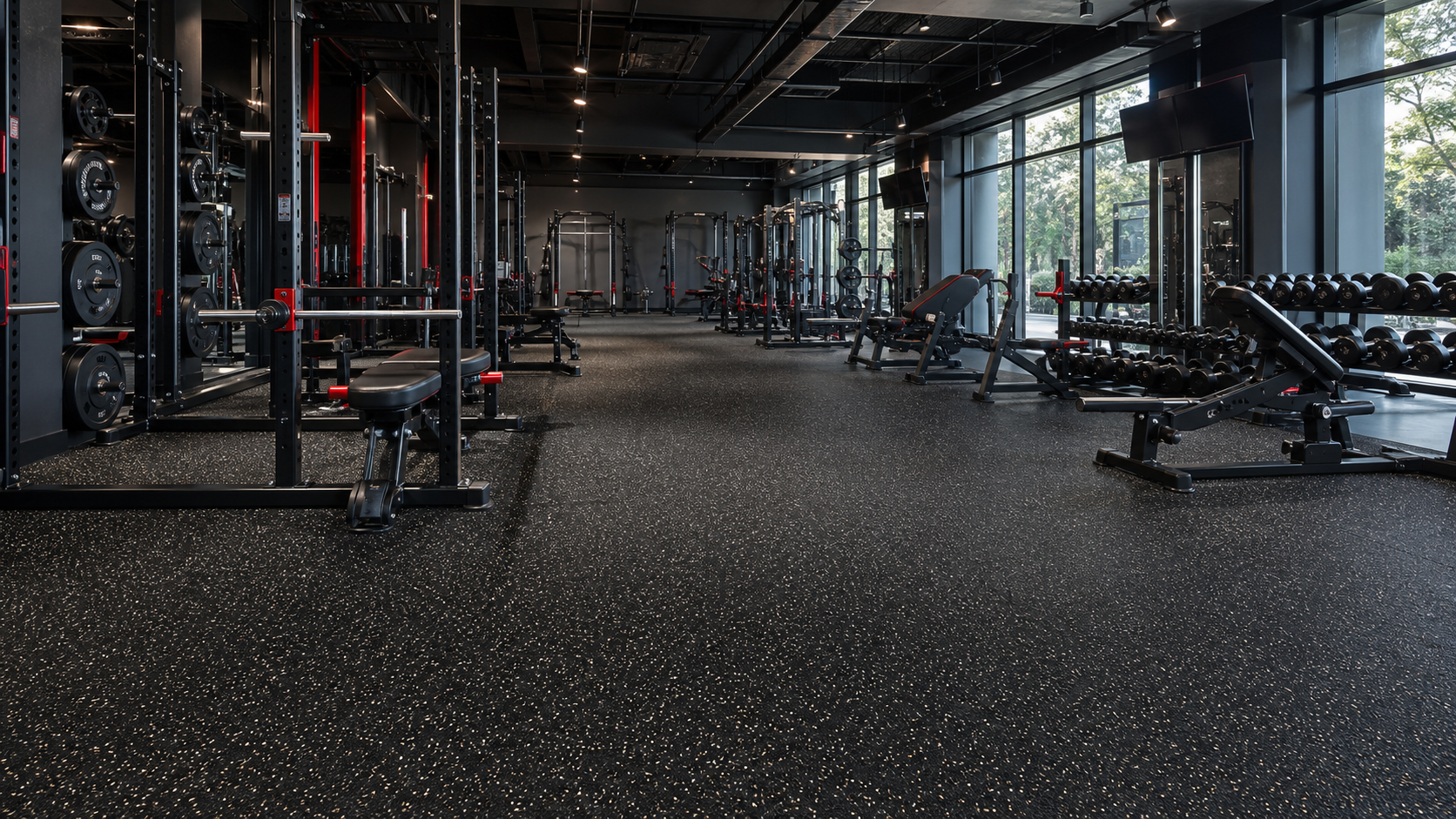
Gym owners, school gyms, sports facilities, contractors and distributors.
Compare surface, density, color and thickness before bulk order.
Send area size, product type, quantity, destination and packaging needs.
Discuss cartons, pallets, labels, documents and container loading.
These are sourcing directions, not fixed engineering promises. Final thickness depends on training use, equipment load, product model, subfloor and installation environment.
Rubber tiles provide localized protection and can be replaced in high-wear areas.
Interlocking formats can help temporary or phased installations.
Underlay can support projects where impact noise is a purchasing concern.
Heavy impact requires more than a thin surface mat.
Do not rely only on thickness; density and product structure also matter.
Final thickness depends on training use, equipment load and installation environment.
Check tile fit and subfloor flatness before bulk installation.
Plan transitions around racks and platforms.
Confirm cleaning and maintenance expectations with the end user.
Custom thickness
EPDM color flecks
Interlocking edge options
OEM carton and pallet marks
Rubber gym tiles are usually preferred because they can be thicker and easier to replace than rolls in heavy-use zones.
Interlocking tiles can be useful, but edge strength, subfloor flatness and equipment load should be checked.
15-30mm is a common suggested range depending on equipment and impact level.
Yes. Qualified B2B buyers can request samples to compare thickness, density, color and surface.
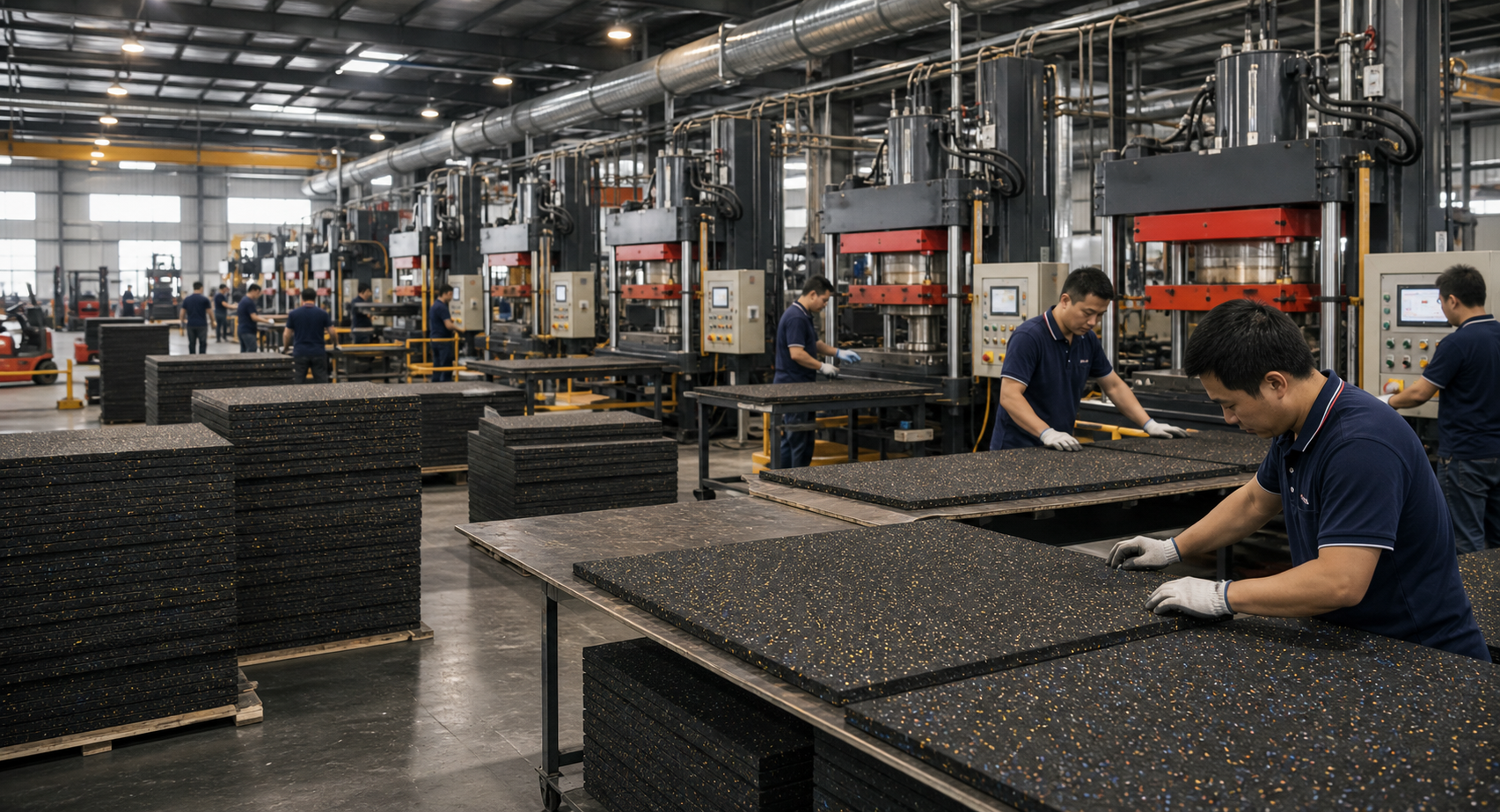
Use this link to compare products, review OEM support or request samples.
Open pageUse this link to compare products, review OEM support or request samples.
Open pageUse this link to compare products, review OEM support or request samples.
Open pageUse this link to compare products, review OEM support or request samples.
Open page